

What Comes After Framing? Understanding the Rough-In & Dry-In Stage
Once framing is complete, your home finally looks like… a house. You can walk through rooms, see doorways, and understand the layout. But before drywall goes up and finishes begin, there’s a critical phase that happens next: the rough-in and dry-in stage.
This step is all about installing the systems that make your home function—while also protecting it from the elements, especially important here in Florida.
Step 1: Dry-In – Protecting the Structure
Before interior work moves too far, builders focus on dry-in, which means making the house weather-resistant.
This typically includes:
Roofing underlayment installed over roof sheathing
Windows and exterior doors set in place
Exterior openings sealed
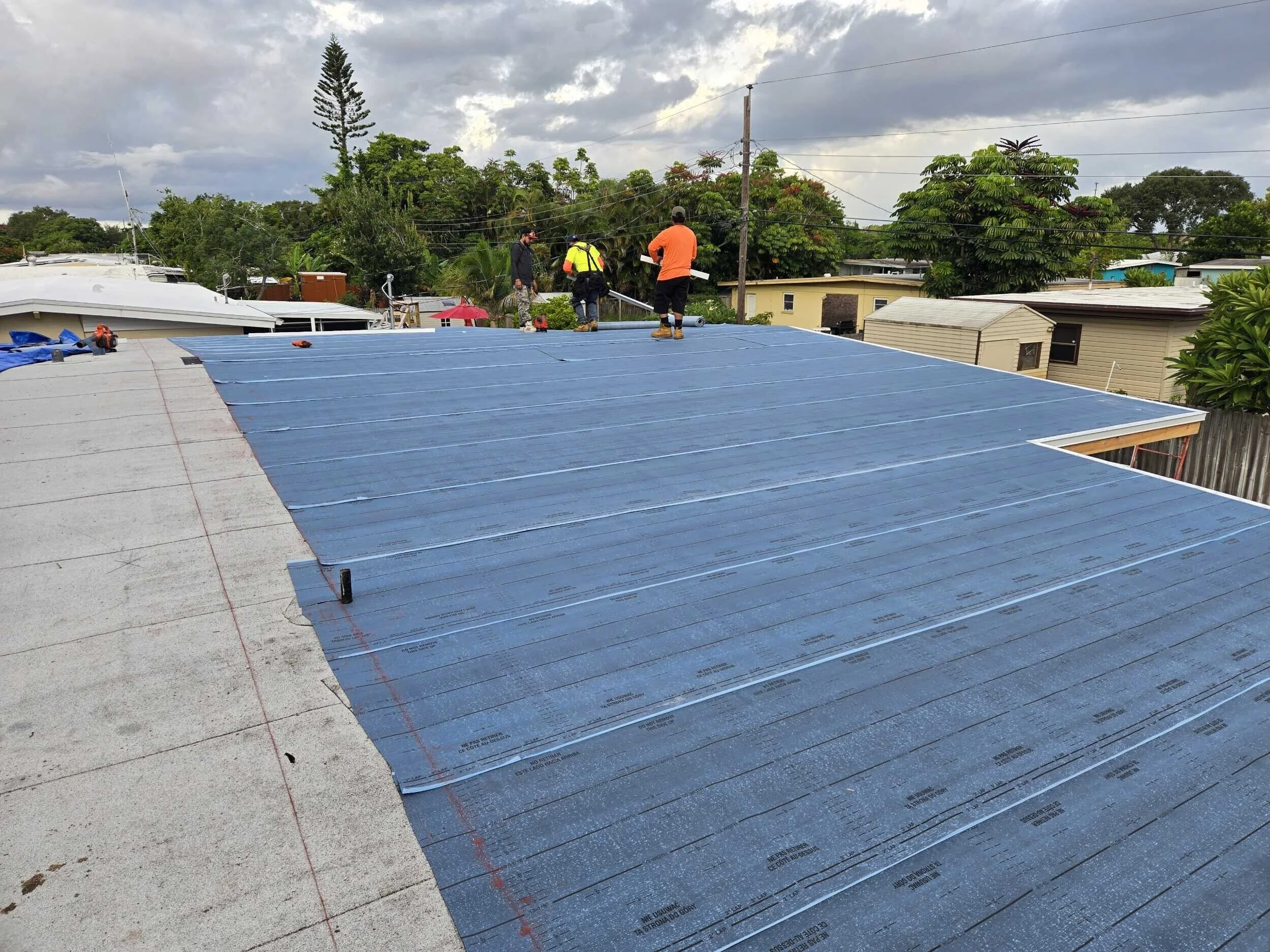
Why This Matters in Florida
Florida weather doesn’t wait. Rain, humidity, and storms can cause damage fast. Dry-in helps protect:
Framing from moisture
Subfloors from swelling
Future interior materials from mold issues
In many areas, Florida code also requires enhanced underlayment or a sealed roof deck, which adds another layer of protection if shingles are damaged during a storm.
Step 2: Plumbing Rough-In
Next comes rough plumbing, where pipes are installed inside the walls and floors.
This includes:
Water supply lines
Drain and waste lines
Shower valves and tub connections
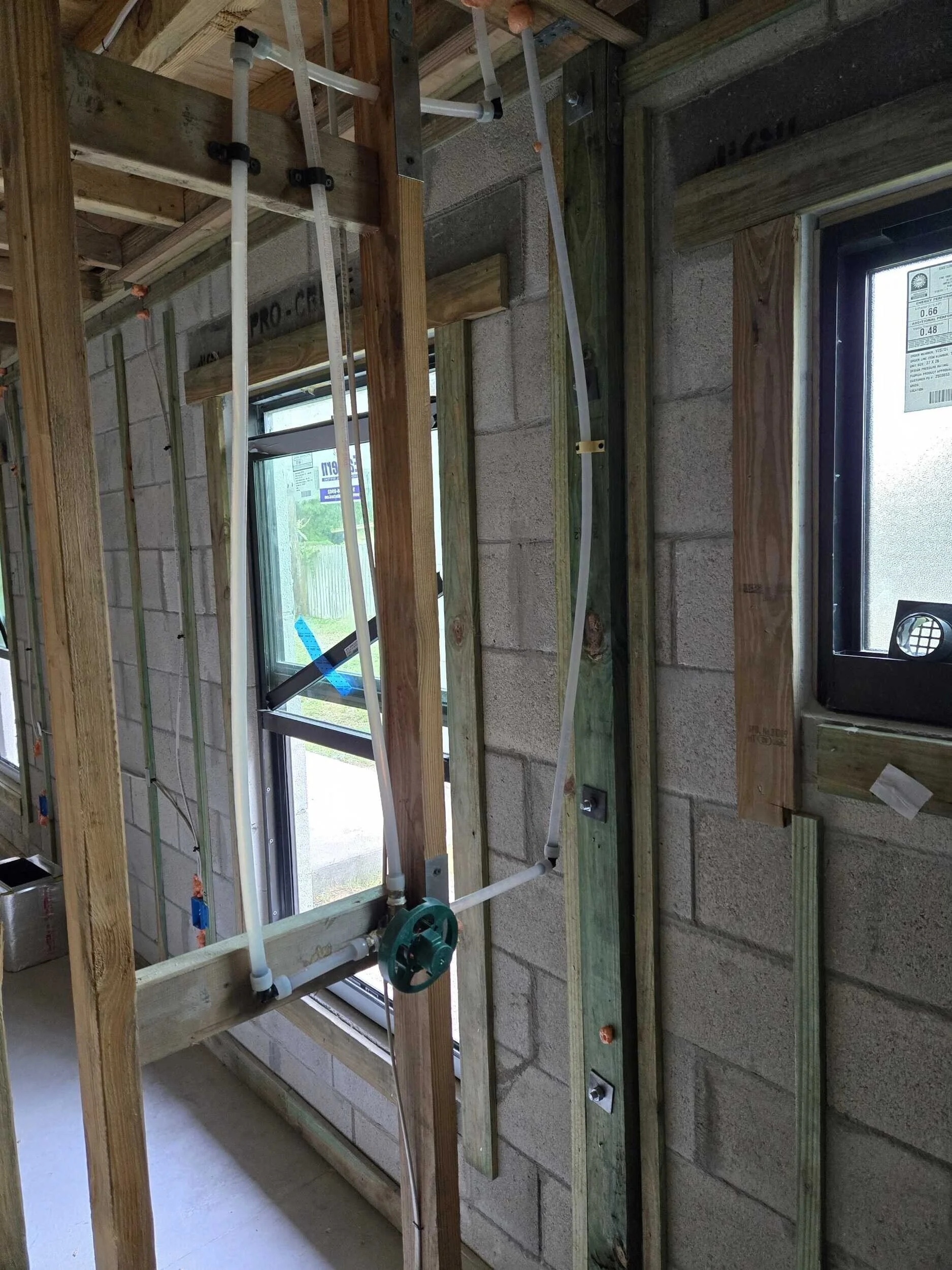
Plumbing rough in for bath/shower
At this stage, you won’t see fixtures yet—just pipes sticking out where sinks, toilets, and showers will eventually go.
Florida-Specific Notes
Proper venting is critical due to humidity
Materials must meet corrosion-resistant standards
Slab homes require careful planning since many lines run under concrete
Step 3: Electrical Rough-In
Electricians then install the home’s wiring before walls are closed.
This includes:
Outlet and switch wiring
Lighting locations
Panel connections
Wiring for appliances and specialty systems
You’ll see blue or yellow electrical boxes mounted to studs, with wires running through drilled holes.
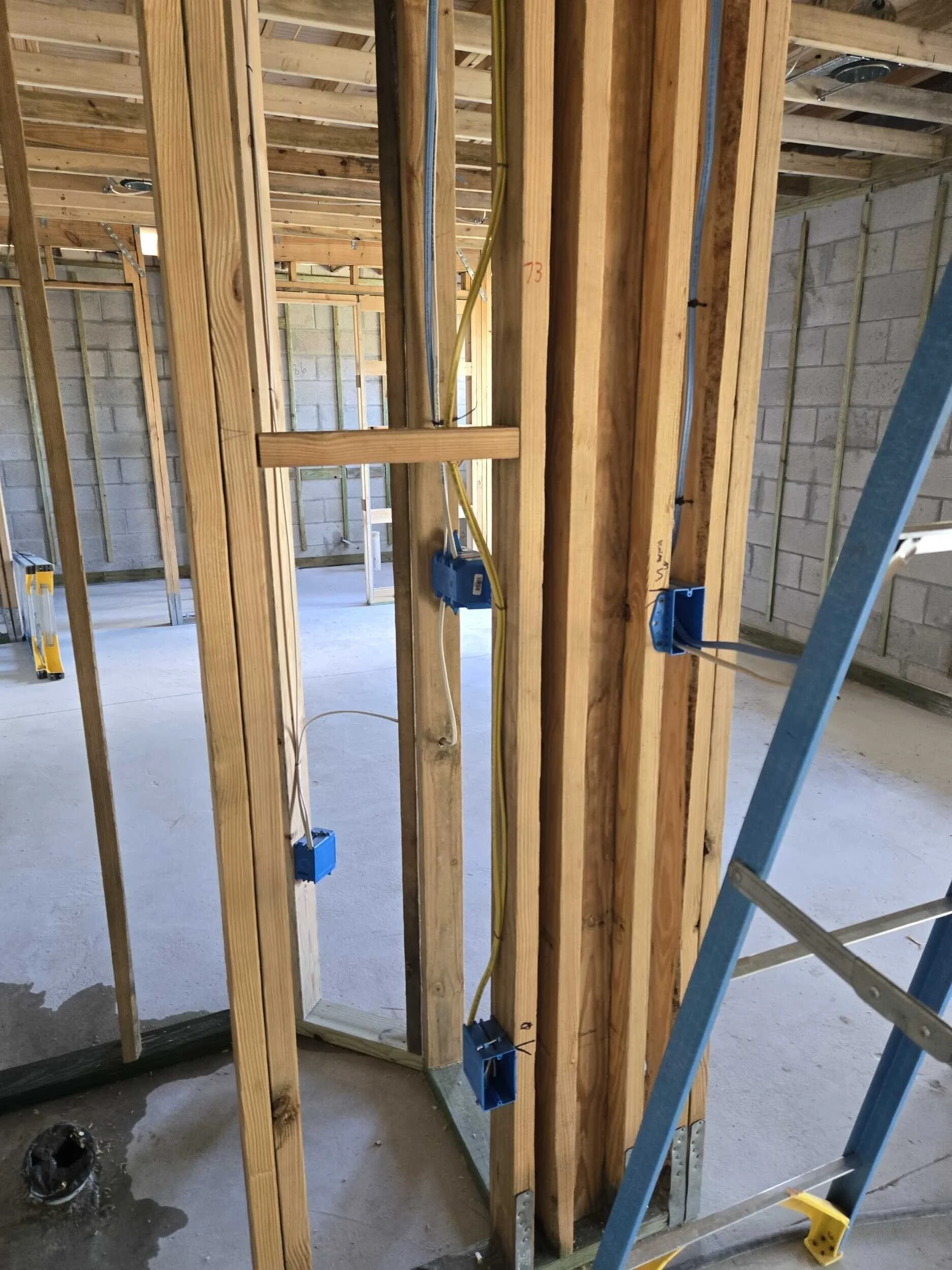
Electrical Rough In
Florida-Specific Notes
Grounding and bonding are especially important
GFCI and AFCI protection is required in many areas
Coastal homes may require additional corrosion-resistant components
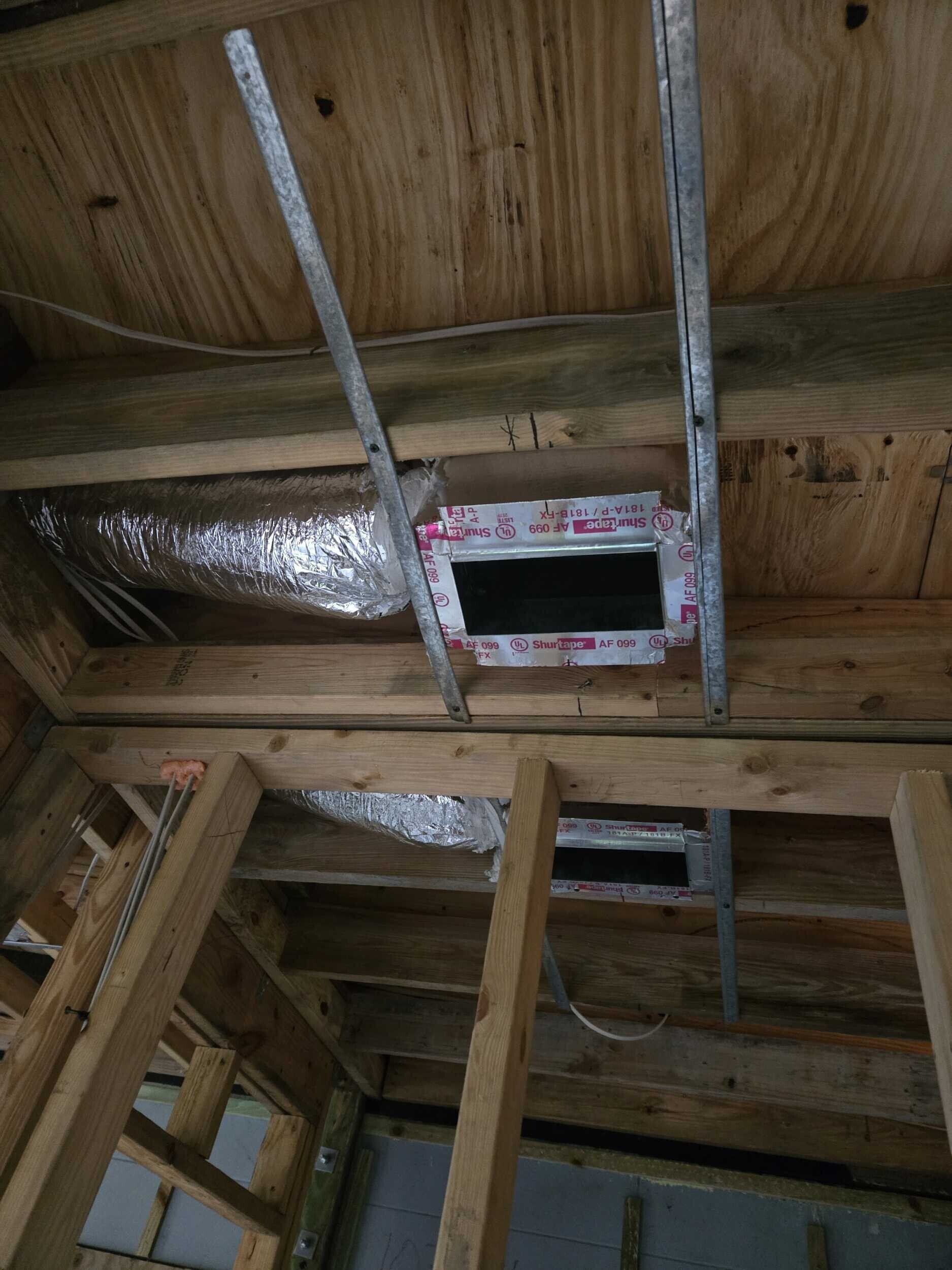
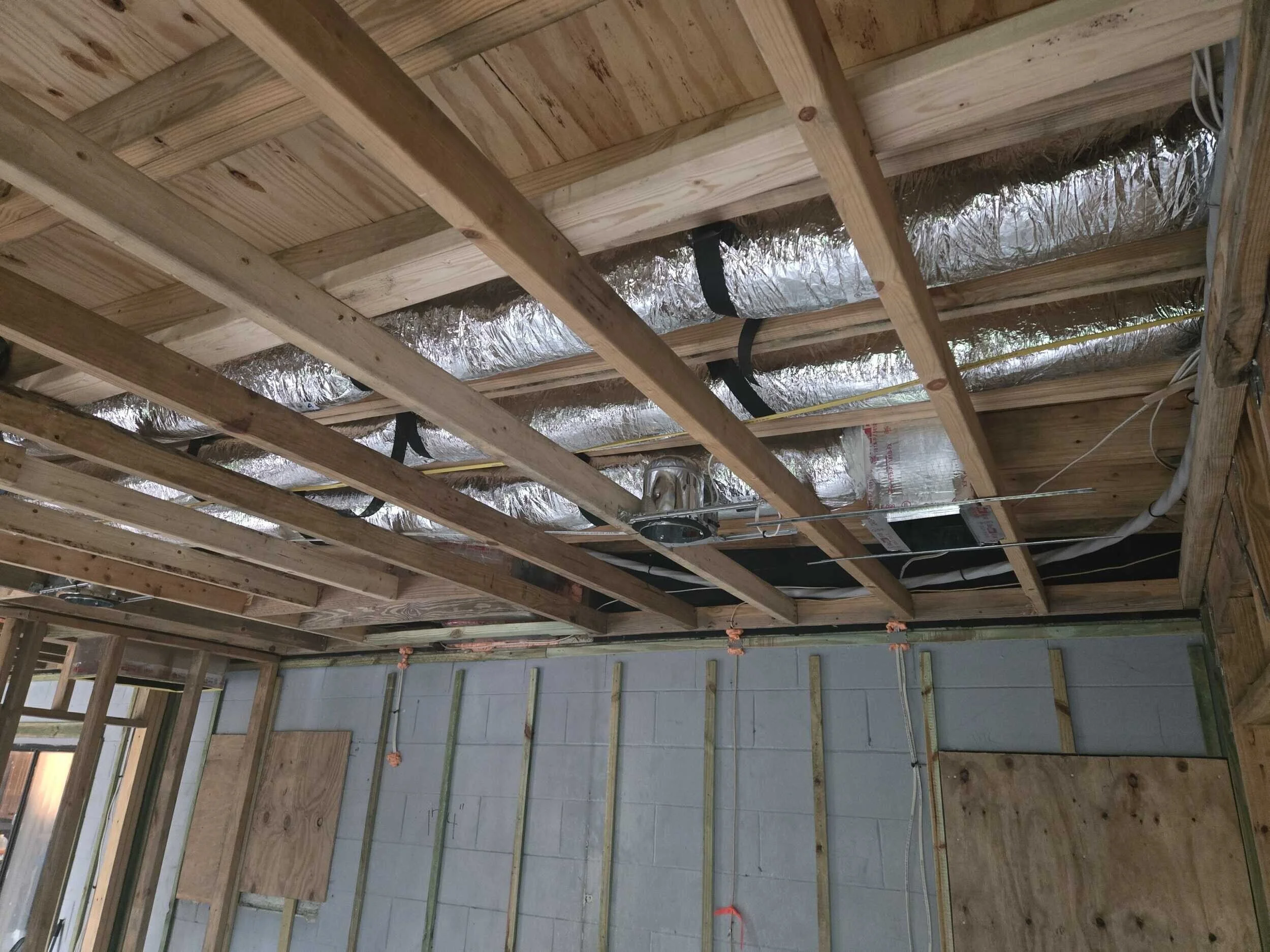
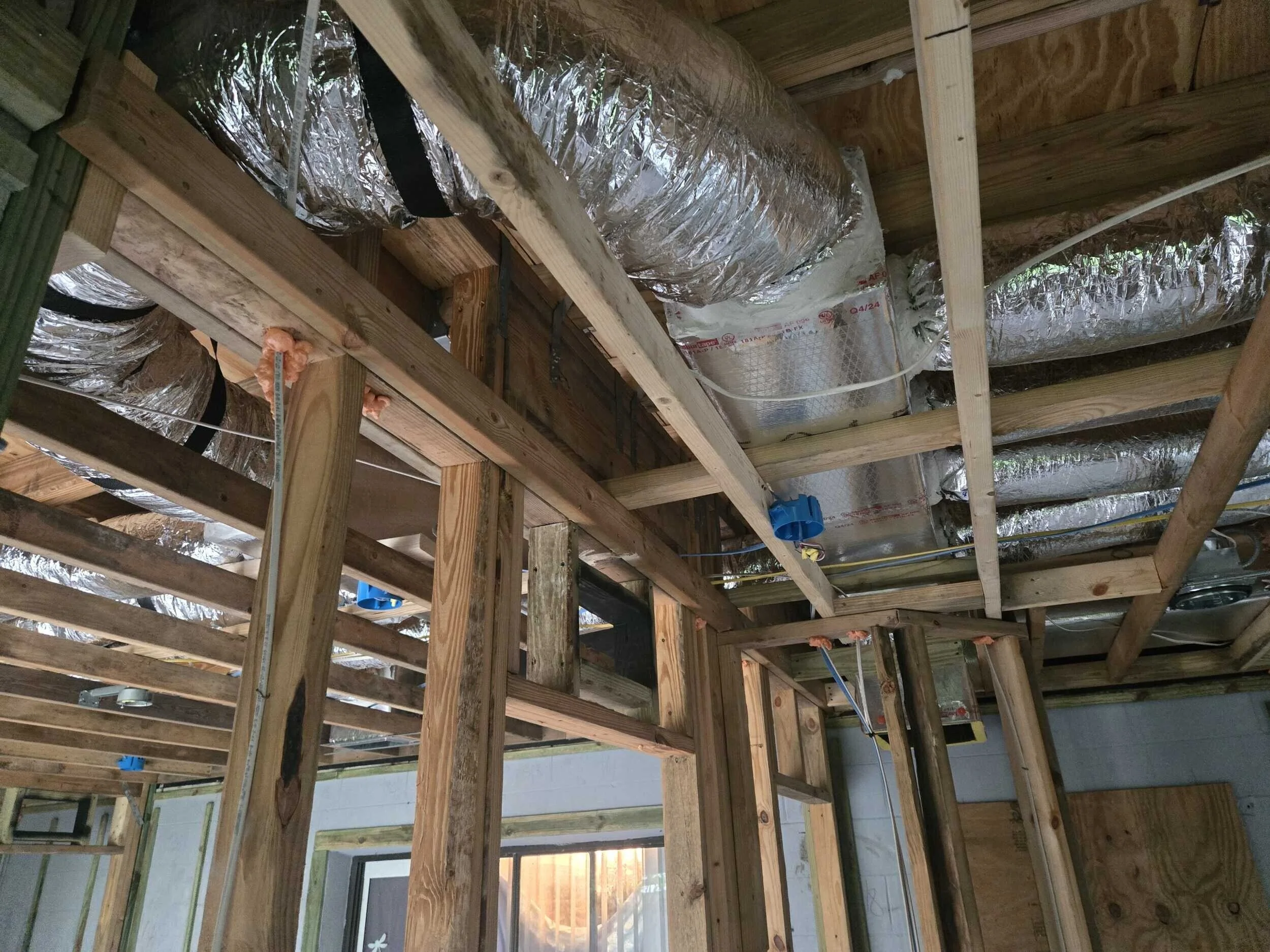
Step 4: HVAC Rough-In
The HVAC system (heating, ventilation, and air conditioning) is roughed in next.
This includes:
Ductwork installation
Air return locations
System layout for airflow and efficiency
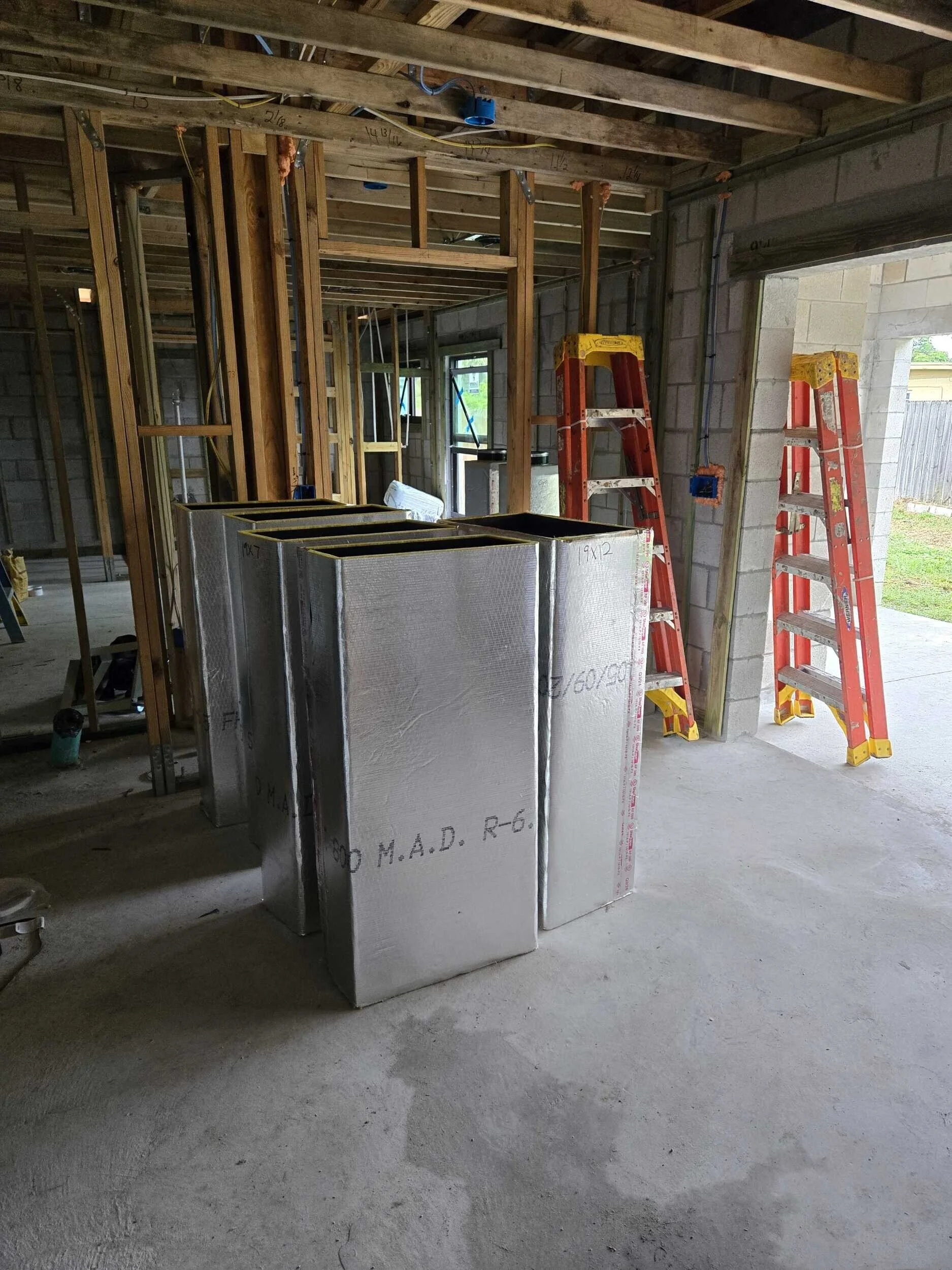
Why This Is Big in Florida
Air conditioning isn’t optional here—it’s essential. Florida homes must:
Manage humidity properly
Prevent condensation buildup
Maintain good indoor air quality
Poor HVAC planning at this stage can lead to comfort issues, higher energy bills, and moisture problems later.
Step 5: Inspections Before Drywall
Before anything gets covered up, the city or county performs rough-in inspections.
Inspectors check:
Plumbing connections
Electrical wiring
HVAC layout
Structural tie-ins
This ensures everything meets code before drywall hides it forever.
Why the Rough-In Stage Is So Important
This phase might not look exciting, but it’s one of the most important parts of the build.
It determines:
How well your home functions
How energy-efficient it will be
How it handles Florida’s heat, humidity, and storms
Once drywall goes up, changes become expensive—so getting this stage right matters.
After framing, your home moves into the rough-in and dry-in stage, where:
The structure is protected from weather
Plumbing, electrical, and HVAC systems are installed
Inspections ensure everything is safe and code-compliant
It’s the step where your home goes from “standing” to truly livable—even though you won’t see the finished results just yet.
Planning a new build or remodel in Florida? From framing to rough-ins and beyond, we focus on building homes that are comfortable, durable, and storm-ready.
➡️ Schedule a Consultation with Sabatino Construction Group